
Adapters
How a ligand reaches its mologram: ready capture adapters, or MACSLink conjugation for your own protein.
Order by sequence ID
Capture adapters and the Immune Profiling binders are sold per sequence ID (01 to 32 and BF), or as 16- and 32-plex bundles. Check which IDs your chip carries on its product page and order the matching ones. One adapter vial (110 µL at 2.6 µM) covers about 10 immobilizations at 200 nM. The Fc receptor, FcRn and Polyreactivity panels are fixed sets, and one QC Oligo vial gives five checks.
Choose the number of ligands. They set the multiplexing: the chip needs at least one address per ligand, and the free ones stay empty. The map shows the addresses your ligands take: full color for an address in use, pale for a free capture strand. The map and colors are those of the chip images on the chips page.
Capture adapters
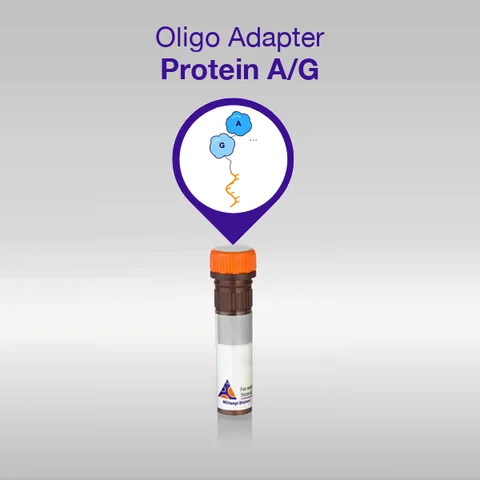
Protein A/G, A/G/L
Fc region of many human and mouse IgGs; A/G/L also κ light chains.
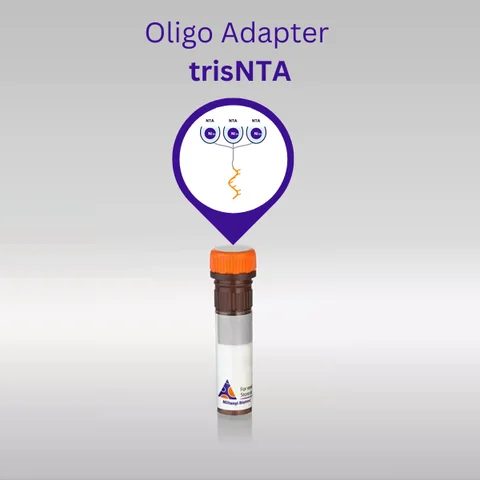
trisNTA
His-tagged ligands. Pre-load with Ni2+ from 500 mM NiSO4, not included.
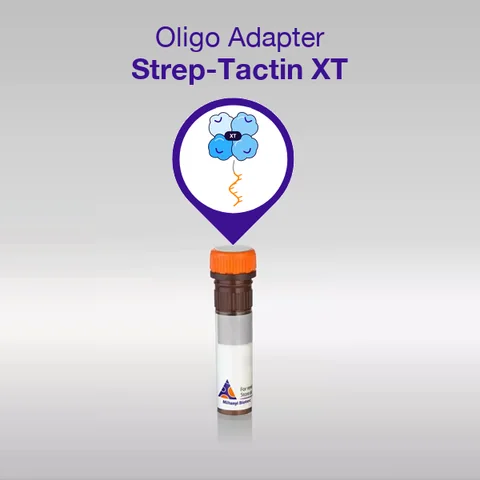
Strep-Tactin® XT
Strep-tag II and Twin-Strep-tag ligands.
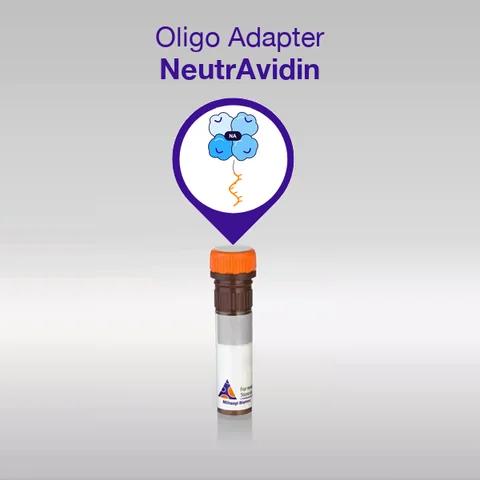
NeutrAvidin
Biotinylated ligands.
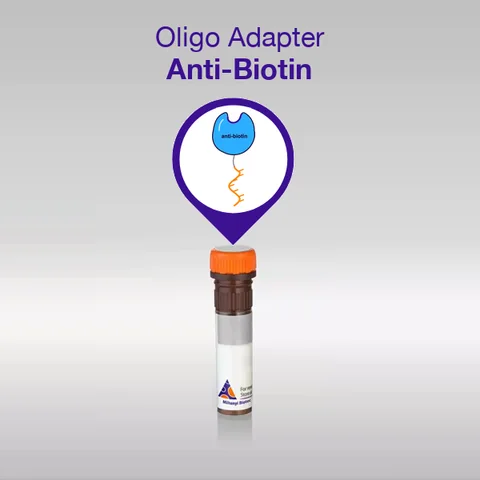
Anti-Biotin
Multi-biotinylated ligands, captured monovalently.
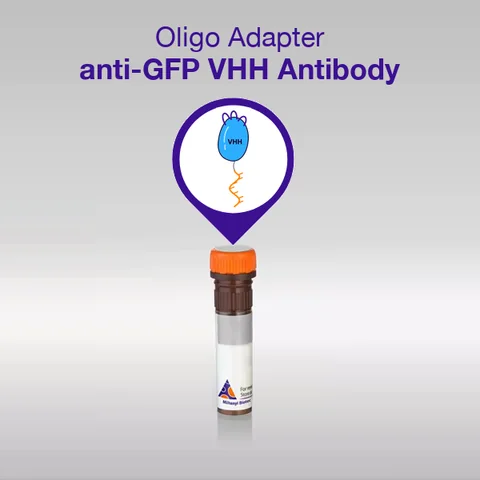
anti-GFP VHH
GFP-tagged proteins and biomolecules.
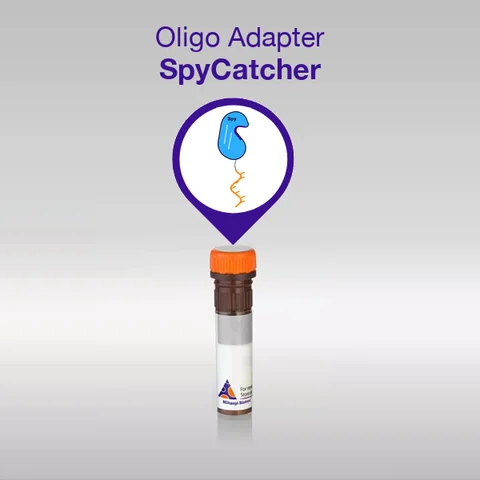
SpyCatcher
SpyTag-fused ligands, covalently.
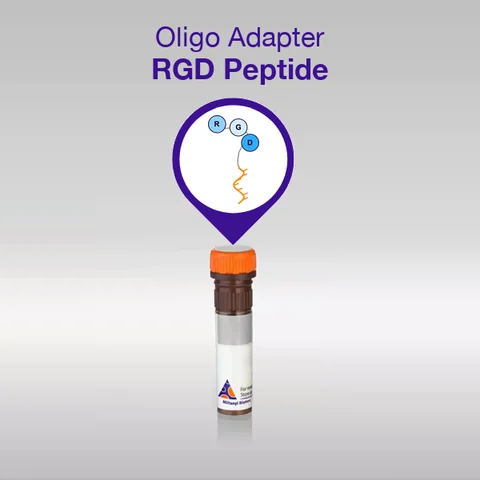
RGD Peptide
An oligo-conjugated ligand for integrin adhesion studies.
The Fc receptors of the Fc Receptor and FcRn Species panels are oligo-conjugated ligands too, rather than capture bridges.
Conjugate your own protein
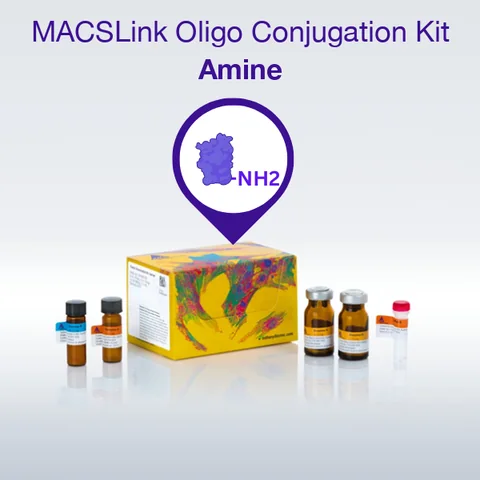
MACSLink Oligonucleotide Conjugation Kit, Amine
Through primary amines; broadly applicable. Pair with the Oligo Adapter for Amine Kit.
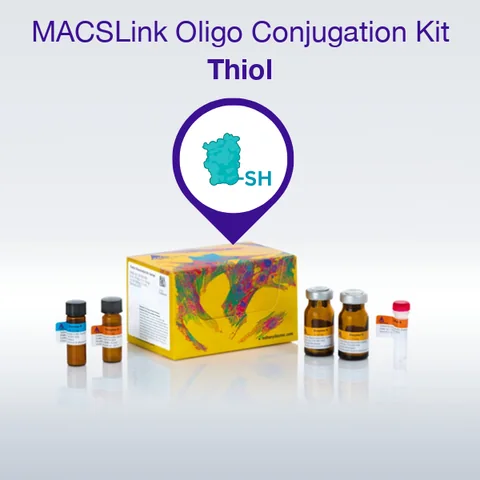
MACSLink Oligonucleotide Conjugation Kit, Thiol
Through a free or engineered cysteine; more controlled orientation. Pair with the Oligo Adapter for Thiol Kit.
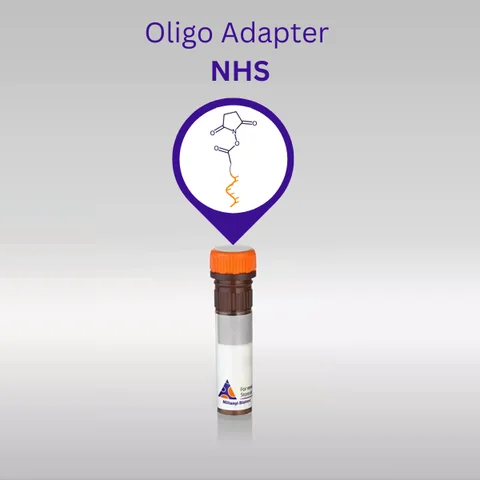
Oligo Adapter NHS
On-chip coupling to primary amines on the ligand.
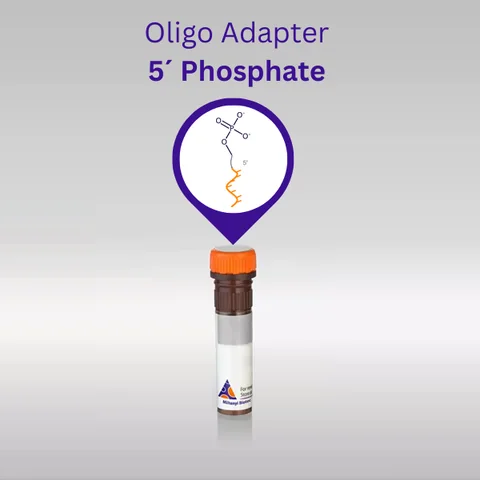
Oligo Adapter 5′-Phosphate
DEL: ligation to DNA-containing hits.
Oligo Adapter Amine
DEL: on-DNA resynthesis of a hit.
The MACSLink kits and the VHH reagents ship on ice.
From adapter to measurement
Every route ends in the same place: an oligo duplex on the ligand's address. Stripping the duplex takes ligand and analyte off together and clears the address for the next ligand. The routes differ in how the ligand holds on to its oligo. A covalent tag catcher or a MACSLink conjugate cannot let go. An affinity capture is reversible by construction.
On a multiplexed chip, that difference matters. A ligand that leaves a dissociable adapter, such as His-tag on trisNTA, can rebind a neighboring address. The documentation therefore advises a stable, covalent attachment for multiplexed chips.
Two neighboring addresses of a DNA chip, 01 and 02, in a side view. Each adapter first meets its own ligand in a separate tube; then the complexes are pooled and injected together. Choose a route and play it, or step through it. The trace is a 1:1 binding model.